Quick take
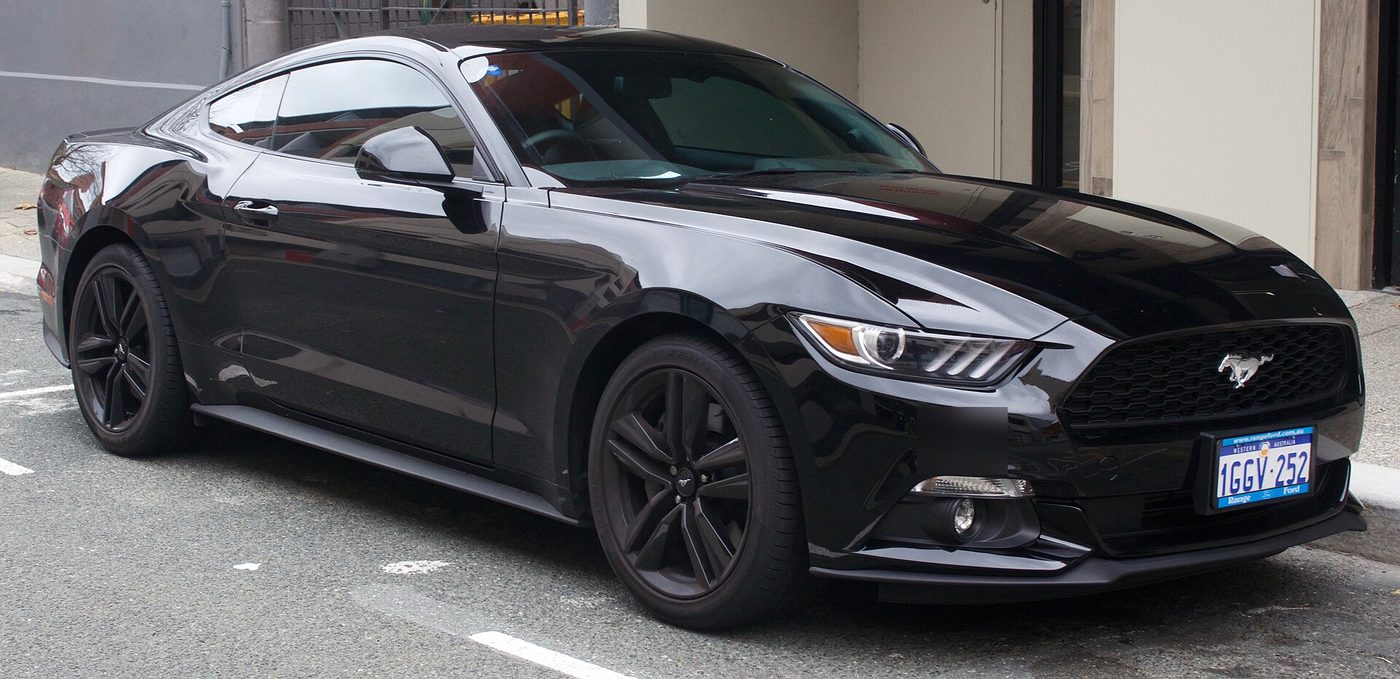
The 2017 Mustang is the last year before the 2018 refresh, and the last year the V6 was offered. If you want the V6, the EcoBoost or a 5.0-liter GT without the newer 10-speed automatic or digital cluster, this is the final year to find them. Shelby GT350 and GT350R versions were also on sale.
Three things deserve attention before you commit. First, the rearview camera: it is the biggest complaint category for this year, and recall repairs have a mixed record with owners. Second, the doors, since many owners describe a door opening to its first latch at highway speed. Third, two recalls specific to 2017, one on a passenger airbag inflator and one on a driver door handle spring, so confirm those are closed by VIN.
What changed for 2017
The 2017 car was mostly a carryover from 2016. It kept the same body, the same engine lineup and the same suspension. The V6, the 2.3-liter EcoBoost and the 5.0-liter GT were all offered, with a manual or a six-speed automatic, and the GT350 and GT350R continued at the top of the range.
The practical point is that 2017 sits right before a visible change. A 2018 car looks different at the front and can be had with newer equipment, so a 2017 is the sensible comparison if you want the older design. Our data also shows fewer complaints for 2017 than for 2015 or 2016, though complaint totals partly reflect how many cars were sold and how long they have been on the road, so do not treat the lower count as proof of a better car.
Known trouble spots to check
NHTSA has 269 complaints for the 2017 Mustang, with 14 crashes, 8 fires and 11 injuries in those records. There are no deaths on file. The top categories are below.
Rearview camera (64 complaints). This is the largest group by a wide margin. Owners describe a blank, flickering or distorted image in reverse. A number say they had the wiring recall done and the fault came back, and some describe being told the next repair was not yet available or that the dealer would not do the remedy. One complaint ties the camera trouble to the third brake light as well. Test the camera more than once, including after the car has been driven for a while.
Doors and latches (41 structure, 29 latches). The pattern is clear. A door, usually the passenger side but sometimes the driver side, slips to the first latch while driving at highway speed. Convertible owners are well represented. The door light comes on, wind noise follows and the owner has to pull over. Take the car on a highway and watch the dash light and listen for wind from the seals.
Engine (27 complaints). Several owners describe head gasket or block coolant problems, white smoke or a damaged engine after a repair. One complaint involves an engine damaged after a timing cover job. Another describes engine damage tied to a car whose odometer reading did not match its history, which is a reminder to read the history report closely. Check the coolant condition, watch the exhaust and ask about any engine repairs.
Electrical (34 complaints). Besides the camera, owners describe smoke and a burning plastic smell from under the passenger seat, and a horn that needs several presses to work. A burning smell is not something to ignore. If you smell it on a test drive, stop and have the car looked at before you buy.
Seat belts and steering. Sixteen seat belt complaints describe belts that lock up or will not latch, and some owners waiting on parts for the 2025 pretensioner recall. Eleven steering complaints include a loose steering wheel and one report of the wheel locking at highway speed without a warning. Pull and release each belt, check that every buckle latches cleanly, and look for play in the steering.
Power train (23 complaints). Owners describe a manual that would not go into gear after a downshift in one case, and automatic transmission problems in others. It is a small sample, so drive each gear and listen.
A few more checks for a 2017:
- Check the windshield corners and the floors for signs of water. One owner describes a cracked weld near the windshield that let water reach the side airbags.
- Check the horn, windows and locks. Small electrical faults can point to wiring or moisture issues.
- Check the oil cooler lines for seepage, given the oil cooler hose recall for cars built in a certain period.
Recalls on a car this age
The data lists six recalls for the 2017 Mustang. Two of them apply to this year specifically. One covers certain 2017 F-150 and Mustang vehicles where the passenger frontal airbag inflator could rupture in a crash. The other covers certain 2017 Mustangs where the driver door's interior handle return spring could come loose, allowing the door to unlatch in a side impact.
The others cover multiple years. One recall covers rearview camera wiring that could be loose or damaged on certain 2015 to 2017 cars. A 2025 recall covers a distorted or blank camera display on certain 2015 to 2019 cars. Another 2025 recall covers corrosion of the front seat belt pretensioner cables on certain 2015 to 2017 cars, and a 2016 recall covers an oil cooler hose that could separate on cars built in a set window. Because several apply to only certain builds, run the VIN at NHTSA's free recall lookup. Recall repairs are free at Ford dealers.
Test-drive checklist
- Start the engine cold. Listen for knocking or rough running, and watch for white smoke at the tailpipe.
- Sit in every seat and test every belt. Pull each one out, let it retract and latch it.
- Drive at highway speed for several minutes. Listen for wind from the doors and watch the dash for a door ajar light.
- Put the car in reverse more than once and check the camera. Try it again after the engine has warmed up.
- On a manual, check the clutch engagement and go through every gear, including a quick downshift. On an automatic, watch for harsh or delayed shifts.
- Hold the steering wheel lightly on a straight road. It should track straight with no looseness or notchy feel.
- Smell for burning plastic or fuel after the drive, and check under the car for drips.
- Check the brakes and tires. On a GT or GT350, look for glazed pads, uneven tire wear and signs of track use.
Before you hand over money
Run the VIN recall check, buy a vehicle history report and pay for an independent inspection. On this year, the history report matters more than usual because of the complaint about odometer problems, so compare mileage on the report with the car's wear.
For a modified car, ask what has been changed, who did it and whether the stock parts are available. Ask whether the car has an aftermarket tune and who wrote it. A tuned EcoBoost deserves an inspection that includes the cooling system. For a GT, ask about clutch replacement, track days and brake fluid changes. Ask what tires are on it and why those were chosen.
When you know what you want, use the payment calculator to see the monthly cost with tax, fees and interest.
Is it the right car for you?
The 2017 Mustang suits buyers who want the older, pre-refresh design and the final year of the V6, or who want a manual or a GT without the newer automatic. It is a reasonable pick if you are prepared to check the recalls and the camera.
It is not a great fit if you want the newest features, such as the digital cluster that came later. If you are drawn to those, look at the 2018 Mustang. If you are not sure about the generation, start with the Mustang overview.
Bottom line
The 2017 Mustang is the last of the early S550 cars, with a smaller complaint pile than 2015 or 2016 but with the same camera and door issues. Confirm the airbag and door handle recalls, test the camera and doors yourself, and be careful with any engine that has been tuned or has an unclear history.