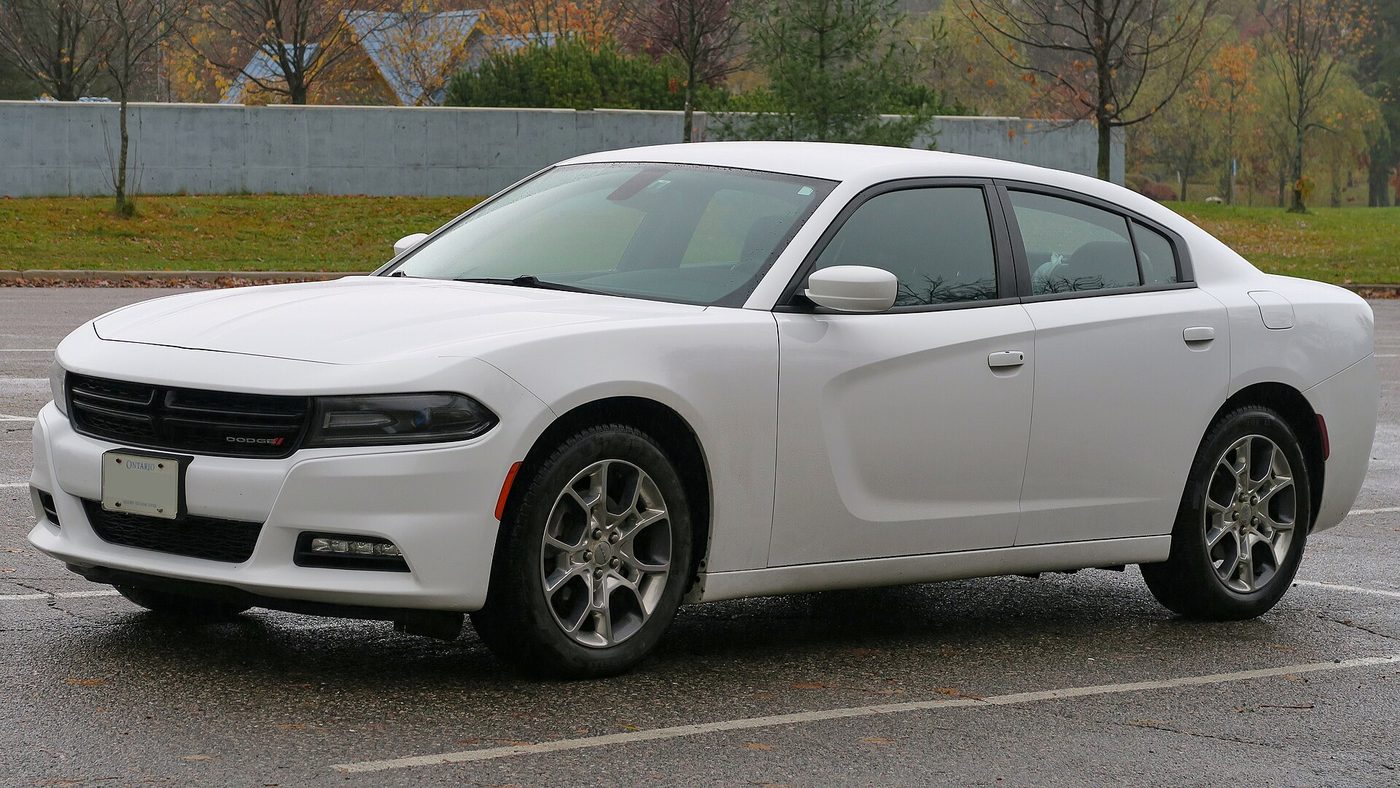
Quick take
The 2017 Charger is a good place to start if you want the refreshed generation after the earliest teething problems. It has the same body and eight-speed automatic as the 2015 and 2016 cars, and it is the first year in our group where the infotainment screen leads the complaint list. Complaint volume is lower than 2016, with 128 reports.
Three things to verify. Test the touchscreen for a long stretch, because the pattern here is a display that acts on its own. Check whether it is a Hellcat, since that engine has its own oil cooler hose recall. And check whether it is AWD, because the AWD driveshaft bolt recall only applies to those cars.
What changed for 2017
For 2017 the Charger kept its look and powertrain choices from the earlier refresh. There was still no manual transmission. The lineup included V6 and V8 cars, SRT versions and the Hellcat, and Daytona-badged versions of the V8 cars were part of the mix in some model years. Trim names are a decent way to separate cars, but don't assume the badge tells you what is under the hood. Ask for the VIN and decode the engine.
The NHTSA safety data for the AWD four-door shows five stars overall, four stars frontal, five stars side and five stars for rollover. Those are scores for one tested configuration. They won't tell you how a heavily modified car behaves.
For comparison, read the 2016 report and the 2018 report. The screen complaints cross over, so the neighbors help.
Known trouble spots to check
NHTSA has 128 complaints for 2017, with 3 crashes, 3 fires and 4 injuries tied to those reports and no deaths. These are owner reports and not rates. They include V6, V8 and AWD cars.
Electrical system (48 complaints). This is the clear leader, and most of it is the screen. Owners describe the touchscreen pressing buttons by itself: changing stations, turning heated seats on, changing climate settings, dialing contacts and even starting an emergency call. Several mention the screen layers separating, and some describe an instrument cluster that misbehaves. Dealer cost quotes and goodwill repairs vary, so ask the seller whether the screen was ever replaced. On a test drive, run the screen for at least fifteen minutes without touching it. Watch for phantom taps, flicker and unwanted changes.
Structure (20 complaints). As on the 2016, interior door panels warp and separate. Some owners say locks or window trim were affected. Check each door and press along the top edge.
Engine (18 complaints). Reports include a misfire on one cylinder soon after plug work, a ticking that grew louder over thousands of miles, an oil leak at a seal, and a failed plastic oil cooler assembly that dumped oil. Start the car cold, listen for tick, and check the oil level and the area around the oil cooler for wetness.
Power train (17 complaints). Owners describe clunking, shaking and loss of power on the highway, a transmission that stopped changing gears, and a shifter warning. One post-repair complaint describes poor behavior right after a dealer transmission job. Drive the car in traffic and on a ramp, and make sure the shifts are clean.
Steering (8 complaints). Owners report power assist dropping out while driving. Test at low speed.
General checks for this type of car:
- Headlights and fuses. Seven lighting complaints mention burned fuses and flicker. Check both beams.
- Cruise control. One owner describes cruise control and wipers acting oddly together. Test cruise control on a quiet road and make sure it cancels when you tap the brake.
- Odometer. One complaint describes a mileage mismatch found after a private sale. Compare the dash number with the history report and service receipts.
- Brakes. Look at pad thickness and rotor condition, and feel for pulsing.
- Cooling. Watch the gauge in traffic and look for coolant seepage.
Recalls on a car this age
Four recalls show up for the 2017 Charger, and each covers a specific group.
- Hellcat engine oil cooler hoses (2017). Covers certain 2017 Challenger and Charger cars with the Hellcat engine. The hoses can fail and cause a fast loss of oil. If the car is a Hellcat, verify this one is complete.
- AWD front driveshaft bolts (2017). Covers certain 2014 to 2017 AWD Chargers and Chrysler 300s. Loose bolts can let the front driveshaft disconnect and cause a loss of drive power.
- Cruise control wiring (2018). A short in the wiring could keep cruise control from turning off. It lists Chargers from 2014 to 2018 and many other models.
- Police AWD V8 driveshaft (2018). Pursuit vehicles with AWD and a V8 only. If the car was a former police car, ask the seller for its history.
Recall repairs at a dealer are free. Run the VIN at NHTSA's recall lookup and ask for proof of completion if the seller says a recall was done.
Test-drive checklist
- Before starting, look at the oil cooler area and under the car for fresh oil. Check the dipstick or oil level display.
- Start cold and listen for ticking. Ask whether the plugs and ignition parts were replaced and when.
- Let the screen run while you drive. Watch for random taps, changed settings, phone calls or navigation prompts.
- Press along each door panel's top edge and check that the locks work smoothly.
- Accelerate hard once on an on-ramp, if the seller allows it. The automatic should shift cleanly without flare, bang or a drop in power.
- Brake from highway speed and feel for pulsing.
- On an AWD car, make tight turns slowly and listen for binding or clunking from the front.
- On a V8 or Hellcat, ask about launches, track days and tires, and look for uneven rear wear.
Before you hand over money
Run the VIN, get a vehicle history report and book an independent inspection. Ask the shop to check the oil cooler, driveshaft, door panels, and to scan for stored codes. Ask the seller if the screen has been replaced and keep any receipts.
For a performance car, ask what was changed and who did the work. Ask whether the engine or transmission computer has been tuned and whether the stock calibration can be restored. Ask whether the car has a performance exhaust, intake or wheels, and ask to see the original parts. Then use the payment calculator to compare monthly costs.
Is it the right car for you?
The 2017 suits buyers who want a roomy performance sedan and will inspect the screen and engine carefully. AWD V6 cars fit shoppers who need year-round grip. V8 and Hellcat cars fit enthusiasts who can verify care and recall history.
Look elsewhere if a glitchy touchscreen would be a deal breaker, or if you want a car with no chance of past modification or track use.
Bottom line
The 2017 Charger has fewer complaints than the 2016, but its screen can be a daily irritation, and the engine and driveline deserve attention. Close the recalls, test the screen at length and let an inspection settle it.