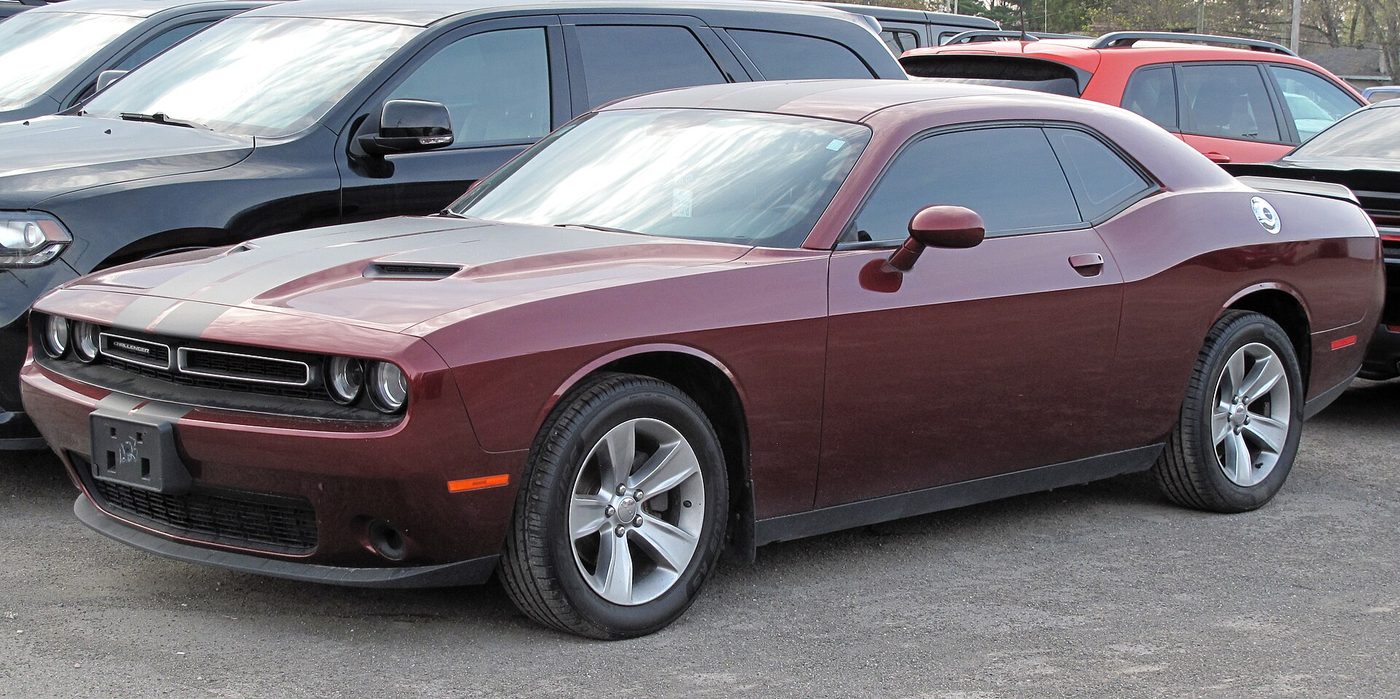
Quick take
The 2017 Challenger has the lowest complaint count of the five years covered here, with 49 reports in NHTSA's data. It is also the first year you can buy a Challenger with all-wheel drive, which changes the shopping list for anyone in a snowy climate. That makes it an appealing year for a buyer who wants a daily-driver V6 or a V8 coupe with fewer reported problems than 2015.
What to verify: the infotainment screen, because a large share of this year's complaints are about it, the park function on 5.7-liter cars with the eight-speed automatic, and the oil cooler hoses if the car is a Hellcat. Two of this year's three recalls apply only to specific versions, so do not assume a clean VIN check on one means the car is covered on all of them.
What changed for 2017
Dodge added the all-wheel-drive GT to the Challenger range for 2017, and the T/A trims joined the performance lineup. The rest of the car carried over from the refreshed 2015 and 2016 models: the same basic body and interior, the eight-speed automatic, and a range that runs from V6 through 5.7-liter and 6.4-liter V8 cars to the supercharged Hellcat.
For a buyer, the practical effect is that a 2017 Challenger could be any of several quite different cars. An all-wheel-drive GT has extra drivetrain parts, a Hellcat has a very different cooling and oil system, and a manual V8 has a clutch to check. The crash ratings shown for this year come from an all-wheel-drive version, so scores can differ by version.
See the overview for the larger picture, and compare with the 2016 and 2018 reports.
Known trouble spots to check
The leading categories in the data are electrical system (16) and a large "unknown or other" group (16). Suspension (6), steering (5), engine (5) and power train (5) follow. Many of the same complaints appear in several groups, so the counts overlap.
The touchscreen. The most consistent theme is the larger infotainment screen delaminating, which means the layers of the display separate. Owners describe ghost touches, where the car acts as if someone is tapping the screen, and in some cases settings change by themselves. Some say it began about a year or two after purchase. A few worry because the screen controls many functions, including climate and the camera. On a test drive, run the screen for a long stretch. Look for bubbling or lifting at the edges, hazy patches and any random behavior with the radio, volume, climate or wipers. Pair a phone and make a call.
Steering. Complaints mention electric steering failures, and one owner says the electric rack wears out after a few years and costs a lot to replace. Others describe the steering warning light and a car that would not start in cold weather. Turn the wheel lock to lock at a stop, then again at a crawl. Watch for warning messages. Cold-start the car if you can.
Engine and cooling. One owner of a 392 describes a radiator fan motor seizing and breaking apart, sending plastic into the radiator. Another reports a blown head gasket found after coolant loss. A third reports an oil cooler leak. These are individual accounts and the numbers are small, but they point to cooling and oil systems as the place to look on a performance car. Check the coolant reservoir, look for stains on the underside, and make sure both cooling fans spin when the engine is hot.
Transmission and park. Some owners describe a "service transmission" message, or a warning that the car is not in park. This connects to a recall on 5.7-liter cars with the eight-speed. See below.
Suspension and structure. Suspension-tagged complaints include a crinkling front-end noise, and one of them also mentions seat belt buckles that stopped latching. Check for clunks over bumps and test all belts.
General checks:
- Look for oil leaks around the oil cooler, filter housing and valve covers.
- Check the trunk release by key fob, button inside and button outside. One owner reports the trunk would open only from the emergency pull.
- Make sure the A/C blows cold within a few minutes.
- Check tire wear. An all-wheel-drive car with mismatched tires can have drivetrain strain.
- Look for aftermarket parts under the hood and ask why they were fitted.
Recalls on a car this age
NHTSA lists three recalls for the 2017 Challenger, and two are narrow.
- Hellcat oil cooler hoses. Covers certain 2017 Challenger and Charger vehicles with Hellcat engines. The oil cooler hoses may fail, causing a rapid loss of engine oil. If the car is not a Hellcat, this does not apply. If it is, confirm that the repair was done.
- Park position. Covers certain 2017 Challengers with the 5.7-liter V8 and eight-speed automatic. The transmission may not stay in park if the driver leaves with the engine running. Another reason to check the shifter and park behavior carefully.
- Cruise control wiring. Covers 2015 to 2018 Challengers, among other FCA models. A short circuit could stop cruise control from disengaging.
Repairs are free at any Dodge dealer, and the VIN tool at NHTSA's recall lookup will show whether a particular car still has an open campaign. A seller telling you recalls have been done is not the same as a dealer record or a clean lookup.
Test-drive checklist
- Start with the screen. Turn everything on and leave it running while you walk around the car.
- Cold start, then listen for ticking, belt noise and fan behavior.
- Shift through the automatic's gears under light and heavy throttle. Check that it holds park on a slope, and that the dash does not show any park warning.
- On a manual, check clutch engagement and the shifter feel in all gears, and that the pedal does not slip under load.
- Drive at highway speed and brake hard from a safe cruising speed. Watch for pulling, vibration or steering warnings.
- If it is an all-wheel-drive GT, make a few tight low-speed turns and listen for binding or clicking from the driveline.
- After a drive, park and check under the car for drips, then recheck the coolant level with the engine cool.
- Look carefully at all four tires for matching brands and even wear.
Before you hand over money
- VIN recall check for the open campaigns listed above.
- Vehicle history report. Look for collision records, title issues and odometer problems.
- Independent inspection with a shop that knows these cars. Ask for a scan of all modules, a cooling system check and a look at the steering and oil cooler area.
If the car has been modified, press the seller for details. Ask what tune is on it, who installed it, whether the original engine computer file is still available and whether the car has run at a drag strip or track. Ask about tires, brake pads and cooling changes. A car that has had hard launches or lap days has earned a deeper inspection of the clutch or transmission, driveline, brakes and cooling.
When the car checks out, run the numbers in the payment calculator.
Is it the right car for you?
A 2017 R/T or GT suits someone who wants a roomy, relaxed coupe with a V8 option, or all-wheel drive in a car with muscle-car looks. A Hellcat suits a buyer who can verify service records and is comfortable with a heavy car that eats tires and brakes.
If you are the sort of buyer who cannot tolerate a flaky touchscreen, or who wants a sharp, light track car, look at other cars. And if you plan to modify the car yourself, budget for a good shop and for cooling and brake upgrades.
Bottom line
The 2017 Challenger has fewer complaints than most years here and adds an all-wheel-drive option. Check the touchscreen, the steering and the cooling system, and confirm the version-specific recalls. Then let a scan and an inspection decide.